




| Getting your Trinity Audio player ready... |
Key Takeaways
- Full Recovery: An anonymous hacker returned 320.88 BTC (worth approximately $21.4 million) to the state after a high-profile theft.
- Phishing Root Cause: The original breach occurred in August 2025 when investigators inadvertently leaked seed phrases on a fraudulent website.
- Exchange Intervention: The return of stolen Bitcoin to South Korean authorities was likely triggered by global exchanges blacklisting the hacker’s wallet.
The Gwangju District Prosecutors’ Office successfully reclaimed over $21 million in digital assets this week, ending a months-long security saga. The return of stolen Bitcoin to South Korean authorities occurred on February 17, 2026, when the unidentified perpetrator transferred the funds back to a government-controlled address. This rare “voluntary” reversal highlights the growing efficacy of on-chain surveillance and centralized exchange cooperation.
For context, South Korea defines digital assets as cryptographic tokens that represent value or rights, which are subject to strict seizure and custody laws.
Stolen Bitcoin to South Korean Authorities: The Phishing Trap
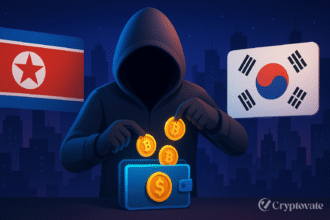
The security breach originated in August 2025 during a routine asset management procedure. Investigators at the Gwangju District Prosecutors’ Office fell victim to a sophisticated crypto phishing attack 2026 while attempting to verify holdings from an illegal gambling case. By entering the wallet’s recovery seed phrase into a malicious clone site, the officials unknowingly granted the attacker full control over the 320.88 BTC.
Remarkably, the loss remained undetected for nearly five months. It was only during a January 2026 audit that officials realized the balance was zero. This oversight has sparked intense debate regarding current confiscated digital asset management protocols and the technical literacy of state investigators.
- Advertisement -


How a Global Exchange Wallet Freeze Forced the Return
The hacker’s “change of heart” appears to be a calculated move rather than an act of conscience. Following the discovery of the theft, South Korean regulators worked with major trading platforms to flag the specific on-chain addresses. This coordinated exchange wallet freeze effectively trapped the assets, preventing the thief from converting the Bitcoin into fiat or alternative tokens.
Once the funds were returned, the prosecution initiated an Upbit cold wallet transfer to ensure the assets remain in a highly secure environment. According to The Chosun Daily, this incident is the largest recovery of government-held crypto in the nation’s history, even as authorities continue their hunt for the individual behind the keyboard.
Strategic Outlook: The 2026 Regulatory Shift
This incident arrives at a critical juncture for South Korea crypto regulation 2026. The government is currently lifting a nine-year ban on corporate digital asset trading, allowing listed companies to participate in the market. However, the 320 Bitcoin recovery serves as a stark reminder that even state agencies struggle with basic private key security.
Why This Matters
The successful 320 Bitcoin recovery proves that while blockchain is decentralized, the “off-ramps” are not. Law enforcement’s ability to render stolen funds unspendable is becoming a powerful deterrent. We expect the National Assembly to introduce stricter mandatory multi-signature requirements for all seized assets by the end of the year to prevent further phishing-related losses.
Also Read: South Korea Crypto Regulation 2026: Stablecoin Laws Delayed Over “Turf War”
FAQs
How did the hacker steal the Bitcoin?
The attacker used a phishing website that mimicked an official crypto management platform, tricking investigators into entering their wallet recovery phrases.
Why did the hacker return the $21M?
Evidence suggests that a coordinated freeze by domestic and international exchanges made it impossible for the hacker to liquidate or move the stolen assets.
Where are the recovered Bitcoins now?
The funds have been moved from the government’s hot wallet to a secure cold storage solution managed by Upbit for long-term safekeeping.
- Advertisement -